

SET INDUCTION
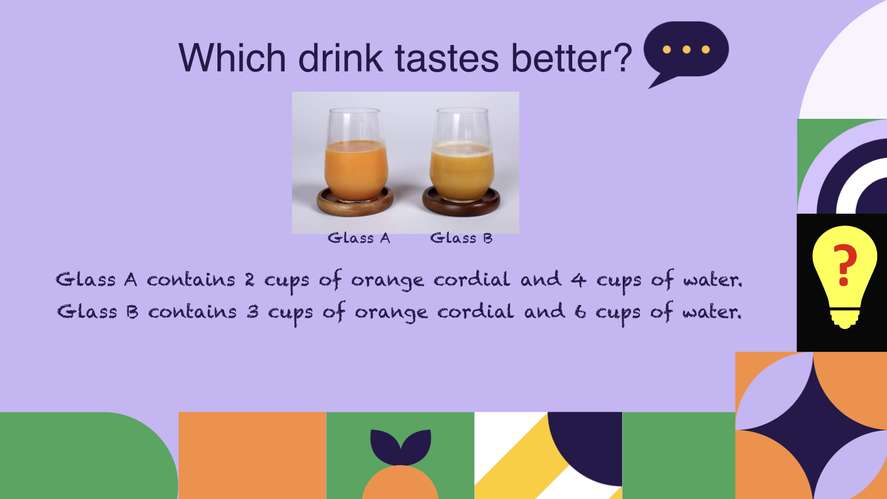
Students are introduced to a hook question such as the flavor comparison "Which drink tastes better?" comparing Glass A (2 cups of orange syrup and 4 cups of water) with Glass B (3 cups of orange syrup and 6 cups of water), or a question about daily routine habits such as time spent playing video games.
The teacher asks questions to elicit students' prior knowledge regarding quantity comparisons. Through this brief discussion, students are prompted to think critically about comparing amounts before introducing the main lesson topic: Ratios.
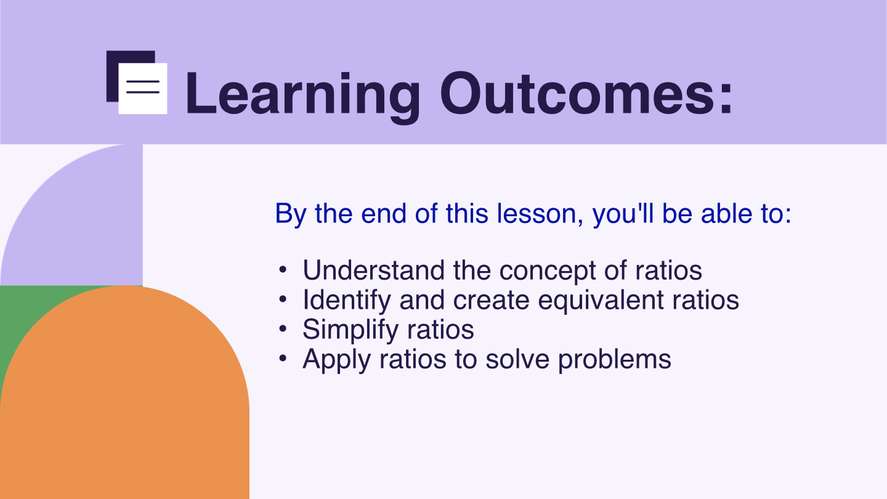
Learning Outcome
Teacher explains the learning outcomes to be achieved:
Teaching and Learning
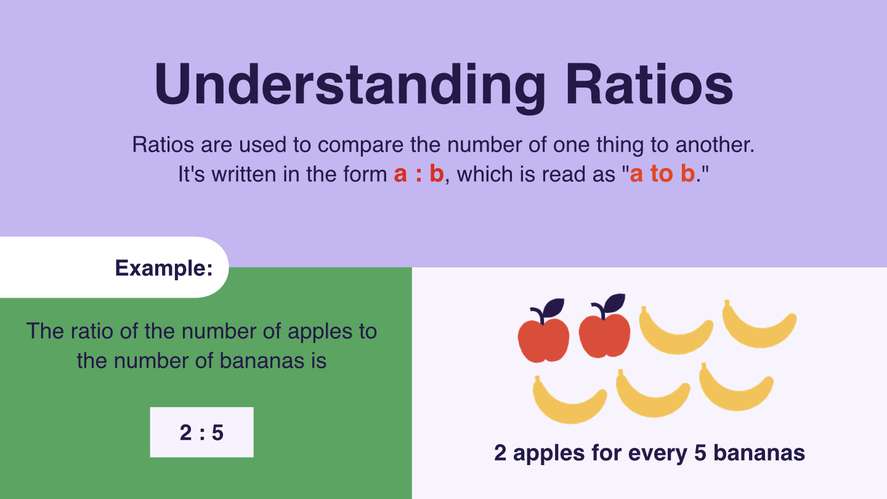
The teacher explains the core concept of ratios.
Concept of Ratio
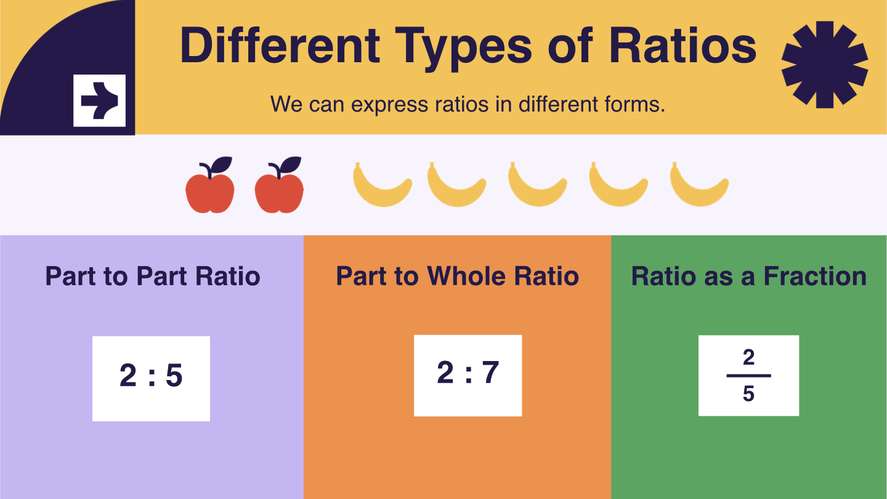
- Types of Ratios
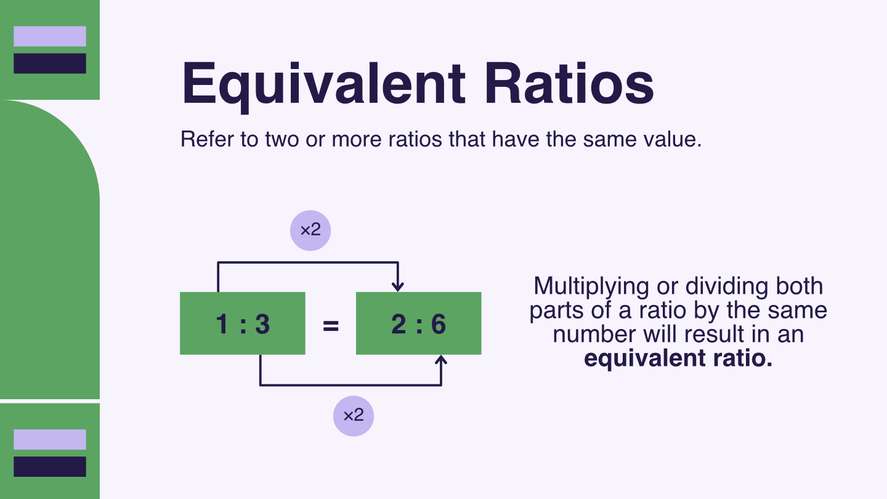
Equivalent Ratios
Activities
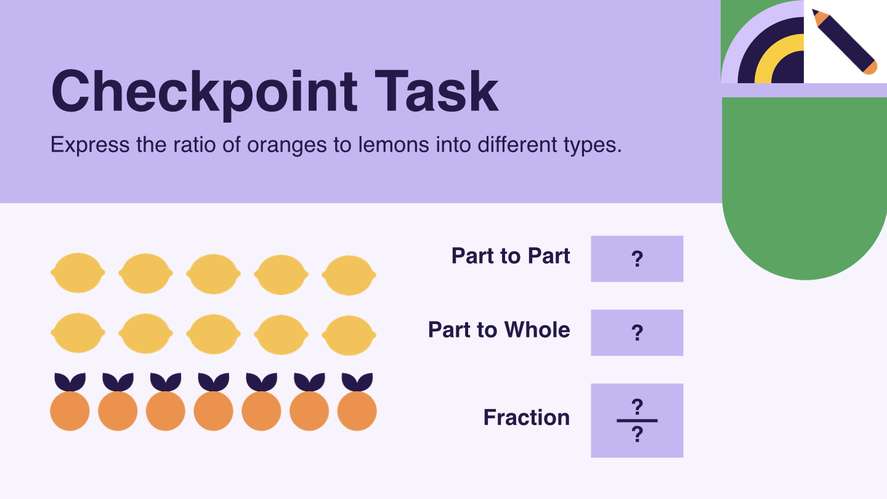
Checkpoint Task: Students participate in a hands-on exercise comparing sets of fruits (such as oranges and lemons) and converting those visual comparisons into three mathematical formats: Part-to-Part, Part-to-Whole, and Fraction.
Real-World Applications:
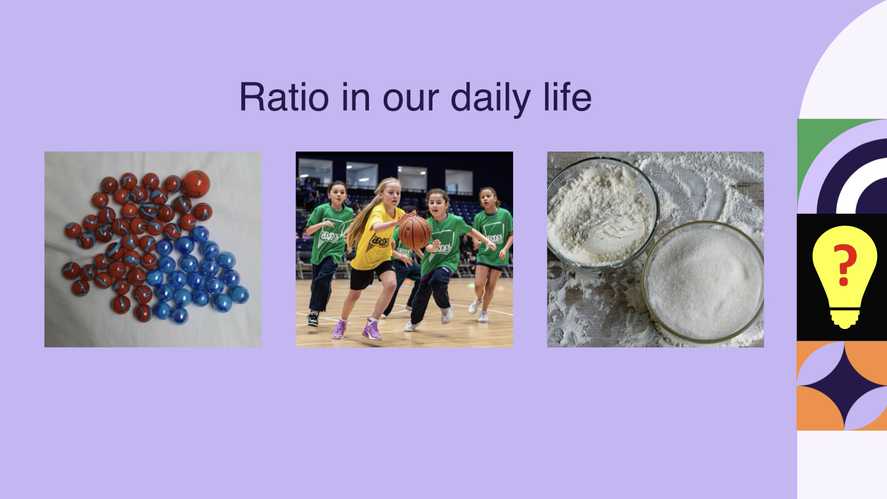
Students identify everyday situations where ratios are used, such as comparing different colored marbles, balancing sports team sizes, or measuring recipe ingredients (like flour and sugar) for baking.
Conclusion
The teacher summarizes the session by reviewing key student milestones:
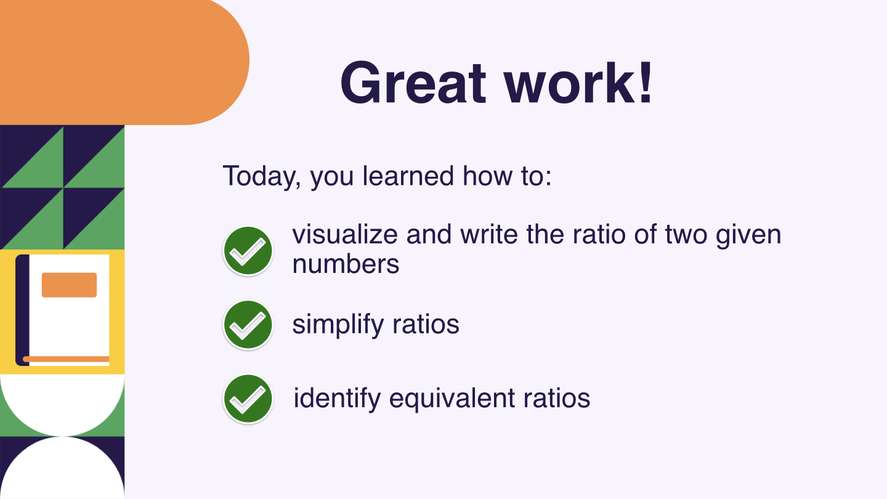
- Ability to visualize and write ratios for given quantities.
- Ability to simplify ratios into lowest terms.
- Ability to identify equivalent ratios.







Attach up to 5 files which will be available for other members to download.