

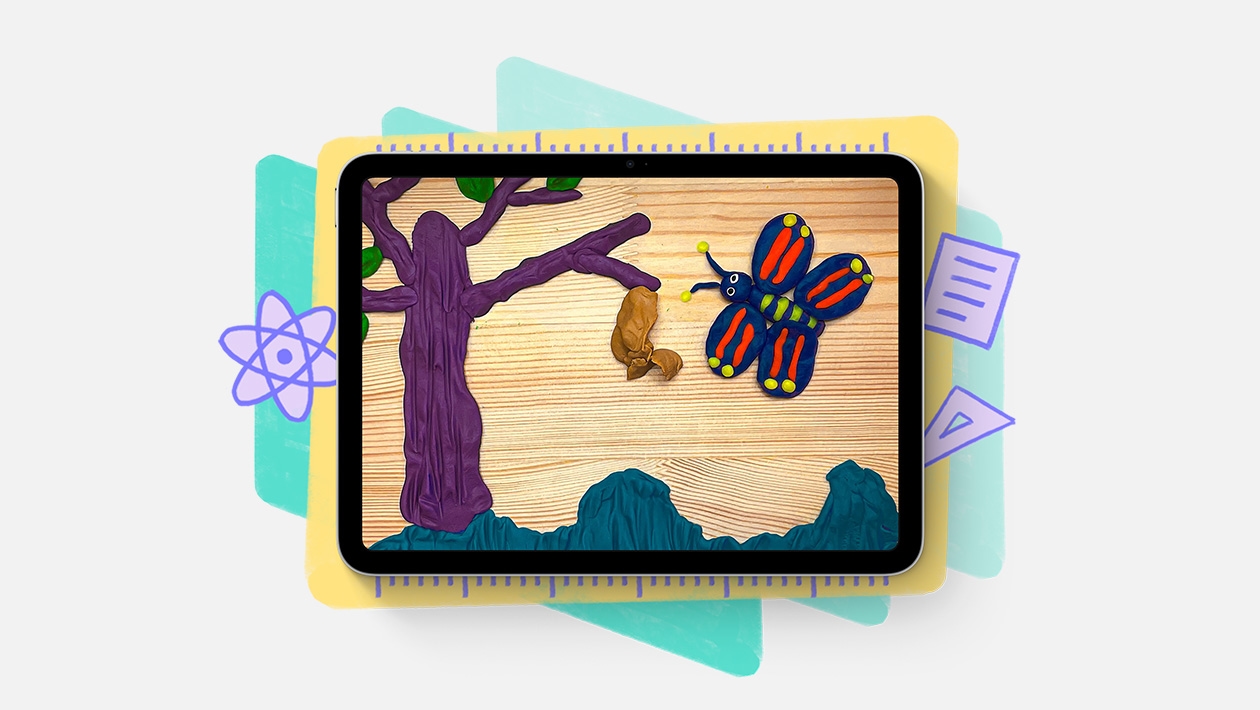
Using stop motion helps students learn by turning abstract or complex ideas into concrete, visual sequences. As students plan, sequence, and create each frame, they must think carefully about order, cause and effect, and key details, which deepens understanding and retention. Stop motion also encourages creativity, problem-solving, and collaboration, while allowing students to explain their thinking through visual storytelling in a way that is engaging, memorable, and accessible.

During our Great Depression unit, students use stop-motion animation to model the phases of the business cycle and visually represent the ups and downs of the economy. Through their videos, students identify which phases are considered positive (expansion and peak) and which are negative (recession, trough, and depression), while also demonstrating that a depression is not a normal part of the typical business cycle. Students use symbolism to represent these periods, pairing pleasant or upbeat music with economic growth and darker or sad music with economic decline. By using a wide variety of manipulatives—such as toy cars, LEGOs, action figures, building blocks, paper, and hand-drawn images—students create videos that reflect their personalities and thinking. This hands-on, creative process deepens understanding, reinforces key economic concepts, and allows students to actively engage with abstract ideas in a meaningful way.

I typically give students time to plan their videos by deciding on a theme, making a list of needed materials, and outlining the steps for filming. This preparation ensures that, on filming day, students can jump right into the process rather than spending time brainstorming. With this structure in place, students are able to complete their stop-motion videos within a single 80-minute class period. After capturing and compiling their images, students import their videos into iMovie to add audio such as sound effects, music, or narration to further explain their thinking.
The uniqueness of each stop-motion video makes this activity especially engaging and enjoyable for students. Because every group chooses different themes, symbols, materials, music, and figures, no two videos look the same, which keeps students invested and curious about each other’s work. This creativity allows students to express their personalities while still demonstrating strong content understanding, helping the learning feel authentic rather than forced. As a result, students often absorb complex concepts naturally through the creative process, learning the material deeply without it feeling like traditional “schoolwork.”








December 22, 2025 . English
Great student examples!
This action is unavailable while under moderation.
This action is unavailable while under moderation.