

Mathematics and Visual Arts are often viewed as two distinct disciplines that rarely intersect. Mathematics is commonly perceived as a subject centered on logic, procedures, and conceptual understanding, while Visual Arts is often associated with creativity, self-expression, and freedom of interpretation. This task challenges these perceptions by demonstrating how both subjects complement and enhance one another.
Students are tasked with designing a creative artwork in which multiple lines connects intentionally, each modeled using systems of linear equations. This task allows students to use critical thinking for mathematical modeling and use artistic thinking at the same time. Bridging two thinking skills that are not usually combined or put together. This also allows students to view mathematics in a positive and more creative way.
How can Year 3 (grade 8) students make use of their artistic skills and precise mathematical modelling with the use of systems of linear equations to design a creative artwork in which multiple lines connects intentionally?

Integration of Mathematics and Visual Arts
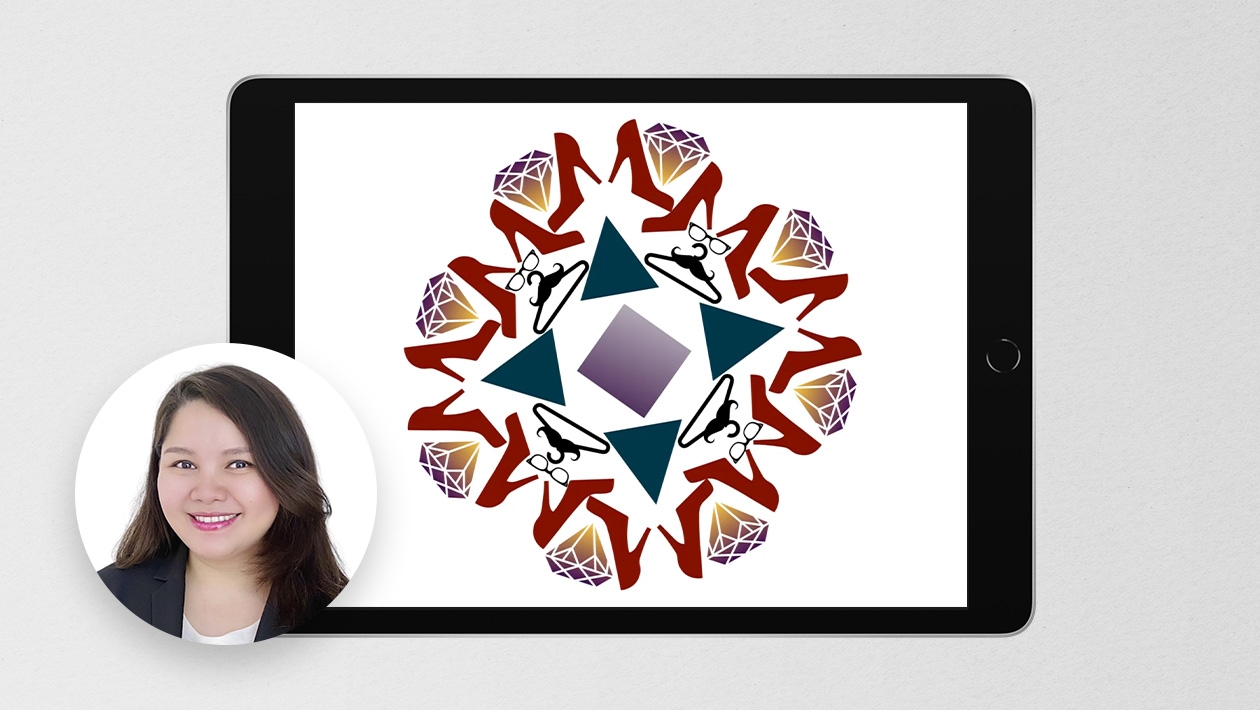
This task integrates Mathematics and Visual Arts by challenging students to design a creative artwork using systems of linear equations. Students explore how mathematical precision and artistic expression can work together as they create multiple interconnected lines, each represented by linear equations that form intentional patterns, shapes, and designs.
Through the use of digital graphing tools such as Desmos and/or GeoGebra (but may also use Mathnotes and Keynote), students model, graph, and analyze systems of linear equations to construct their artwork. Although some students are also allowed to use traditional way of making artwork by using graphing paper too. This gives the students opportunity to make use of their skills and find comfort on what and how will they do the task according to their own strengths. The activity encourages students to apply algebraic concepts in a meaningful and creative context while developing critical thinking, problem-solving, and design skills. By bridging mathematical modelling with artistic creativity, students gain a deeper appreciation of how mathematics can be used beyond traditional problem-solving and as a tool for visual expression.


This task supports the development of ATL (Approaches to Learning) skills in Creative Thinking and Critical Thinking and promotes the IB Learner Profile attributes of being Thinkers, Knowledgeable, and Communicators. It provides students with an opportunity to demonstrate conceptual understanding of systems of linear equations while producing a unique and visually appealing final product.
The Task Process
Step 1: Sketch or Plan out the artwork that you want to create. This may start on plotting the points or making dots for the important connections of the line art or the design itself. This may be done on the website or application itself. This may be done in Geogebra/Desmos, or in Mathnotes.

Step 2: Once the lines are finalized, you may start on refining and adjusting the sketch of your artwork in order to form its draft.

Step 3: Finalize the list of systems of linear equations by intentionally pairing up the lines that are connected to each other, you may start solving for the systems of linear equations using either elimination or substitution method. This may be done in Freeform or Keynote for better organization of the output.

Step 4: Going back on the sketch or the graph, students may use it as an outline of their artwork and start working on it creatively. They may color it, tessellate it, or make use of it as a pattern to create their final artwork. This can be done in keynote or freeform, as they need to organize the details of their work.

Why This Matters

By representing mathematical concepts through visual and artistic creations, students are encouraged to recognize the creative nature of Mathematics. At the same time, they discover that producing meaningful artwork requires planning, structure, precision, and critical thinking - skills that are also fundamental in Mathematics. Through the exploration of systems of linear equations and the creation of line sketches, students experience how artistic expression can be guided by mathematical reasoning.
This learning experience helps students develop a deeper appreciation for both disciplines. It highlights that solving mathematical problems often requires creativity, while creating artistic works benefits from logical thinking and careful design. As a result, students build stronger connections between conceptual understanding and creative application, fostering a more holistic and engaging learning experience.
.png)







Attach up to 5 files which will be available for other members to download.