

Title : Seeing the Invisible: Exploring the Microscopic Model of Current
Subject: Physics
Age : 18–19 years old
Level : Matriculation (Foundation Programme)
Topic : Electric Current and Direct Current
Subtopic: Microscopic Model of Current
Learning Standards:
At the end of the lesson, students will be able to:
Describe the microscopic model of electric current.
Explain the movement of free electrons in a metal conductor.
Relate electron flow, electric field and conventional current.
Communicate scientific concepts using digital tools.
Essential Question
“If electrons move so slowly, why does the light bulb turn on almost instantly?”
Lesson Overview
Students begin by watching a short animation showing how electric current flows inside a metal conductor. Instead of simply receiving information, they investigate the movement of electrons and collaboratively create their own visual explanation using Apple Keynote. Students then complete an Apple Pages student worksheet to record their observations, answer guiding questions, sketch their ideas and reflect on their learning. Through discussion, presentation and reflection, students develop a deeper understanding of the microscopic model of current while strengthening creativity, communication, critical thinking and digital storytelling skills.
🚀 Mission 1 – Observe & Think
Activity
Watch the microscopic model animation.
Students identify:
What is moving?
What provides the energy?
Why is there current?
🚀 Mission 2 – Create & Explain
Activity
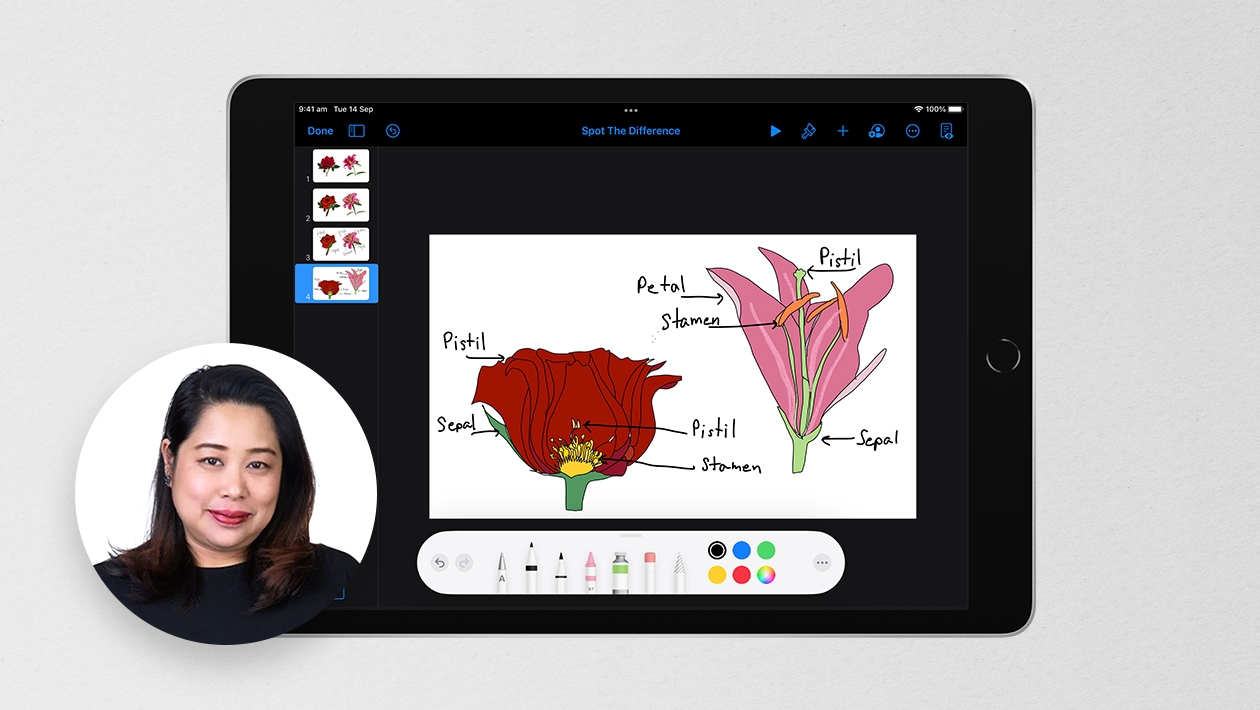
In pairs, students create ONE Keynote slide explaining the microscopic model of current.
The slide must include:
Free electrons
Electron flow
Electric field
Conventional current
Students may use:
Shapes
Icons
Animations
Magic Move
Drawing tools
Finally, each pair gives a 1-minute presentation.
🌍 Mission 3 – Connect with SDG
SDG 7 – Affordable and Clean Energy
Challenge
“Efficient electrical systems reduce energy loss and improve the delivery of electricity.”
Students discuss:
Why is understanding electron movement important when designing electrical wires?
How can efficient electricity transmission contribute to clean energy and sustainable development?
Students conclude by writing ONE action that supports energy conservation.
Assessment Ideas
Formative Assessment
✅ Teacher Observation
Observe whether students can correctly explain:
Free electron movement
Drift velocity
Electric field
Conventional current
Teacher Reflection
Reflect on:
Were students able to distinguish between electron flow and conventional current?
Did creating their own Keynote improve conceptual understanding?
Which misconceptions remained?
How can the activity be improved in the next lesson?
Extension Activity
Students redesign their Keynote into a 30-second educational animation using Magic Move and voice narration.







Attach up to 5 files which will be available for other members to download.