

CHEMISTRY DIGITAL STORYTELLING PROJECT
Subject
Chemistry
Level
Form 4
Theme
Salts
Chapter
Chapter 6: Salts
Learning Standard
6.10 Colours of Salts
At the end of the lesson, students are able to:
- State the colours of selected salts and metal compounds.
- Identify the relationship between metal ions and the characteristic colours of their compounds.
- Explain colour changes observed when certain compounds are heated.
Focus Area
Recognising and differentiating the colours of selected salts and compounds through observation, investigation and scientific reasoning using digital storytelling.
Cross-Curricular Elements (EMK)
- Creativity and Innovation
- Digital Literacy
- Information and Communication Technology (ICT)
- Higher Order Thinking Skills (HOTS)
- Values: Curiosity, Scientific Integrity and Collaboration
Main Driving Question
"If every coloured salt were a suspect, could you identify the metal ion behind the crime?"
Supporting Questions:
- Why are most salts white while only a few are coloured?
- What makes Lead(II), Copper(II) and Iron compounds different?
- Does a change in colour always indicate a chemical reaction?
- Can scientific observations help solve a mystery?
Experiential Learning
Students become Chemistry Detectives who investigate a series of mysterious coloured compounds through a cinematic investigation. Instead of memorising the colours of salts, students analyse evidence, observe clues, identify suspects and justify their conclusions based on scientific observations. The lesson transforms abstract chemical knowledge into an engaging investigative experience that encourages curiosity, discussion and critical thinking.
Creativity with Apple Technology
This learning experience integrates the Apple Creativity Framework through three complementary applications:
Keynote
- Develops an interactive movie-style investigation using cinematic animations, transitions and visual storytelling.
- Presents chemistry concepts as a detective case to enhance engagement and understanding.
GarageBand
- Produces suspenseful background music, sound effects and narration to create an immersive learning atmosphere similar to a crime investigation documentary.
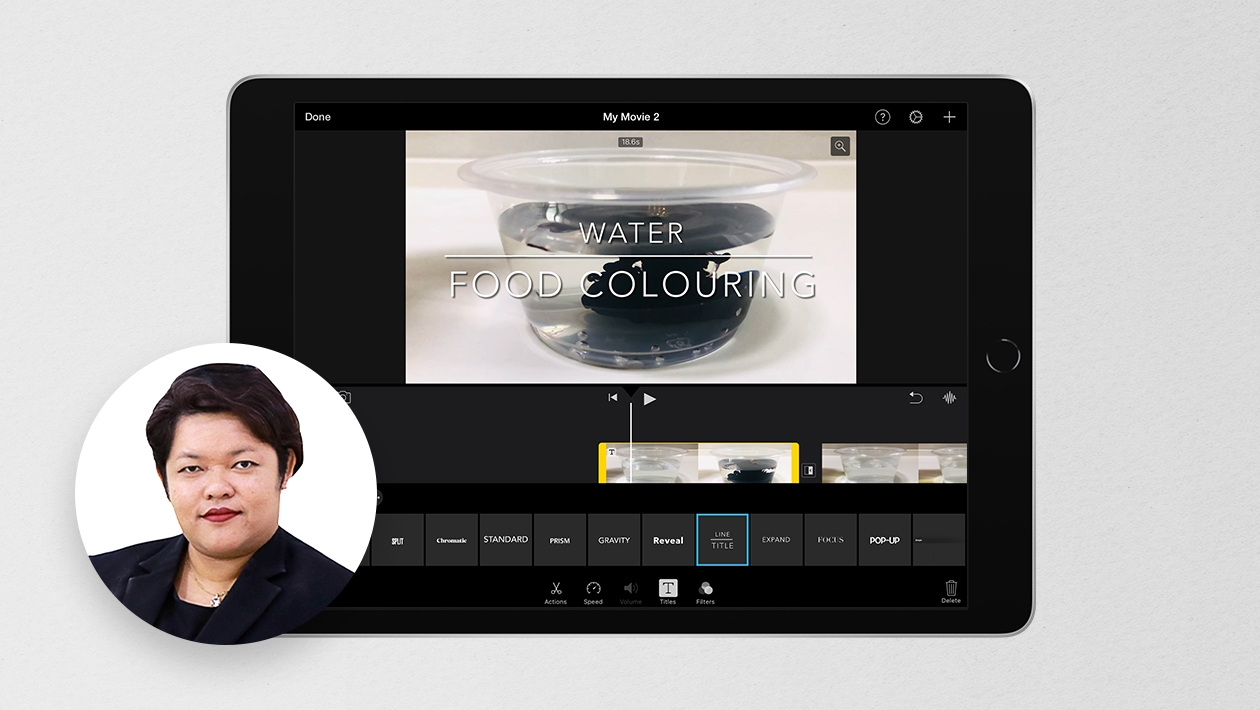
iMovie
- Combines the Keynote presentation, narration and audio effects into a short educational film that can be shared for classroom learning, revision and self-paced study.
Impact Towards Learning
This project transforms passive learning into an immersive experience where students actively construct scientific understanding through storytelling.
Students are expected to:
- Develop a deeper conceptual understanding of the colours of salts instead of relying on rote memorisation.
- Improve scientific observation and analytical thinking by interpreting visual evidence.
- Strengthen communication skills through discussion and justification of their findings.
- Increase engagement and motivation through cinematic learning experiences.
- Develop creativity and digital literacy by experiencing how multimedia technologies can communicate scientific concepts effectively.
Ultimately, the project demonstrates that chemistry can be learnt through curiosity, investigation and storytelling, making abstract concepts memorable, meaningful and enjoyable.







Attach up to 5 files which will be available for other members to download.